Screenshot Fifo Lexicographic Sort
What Happened
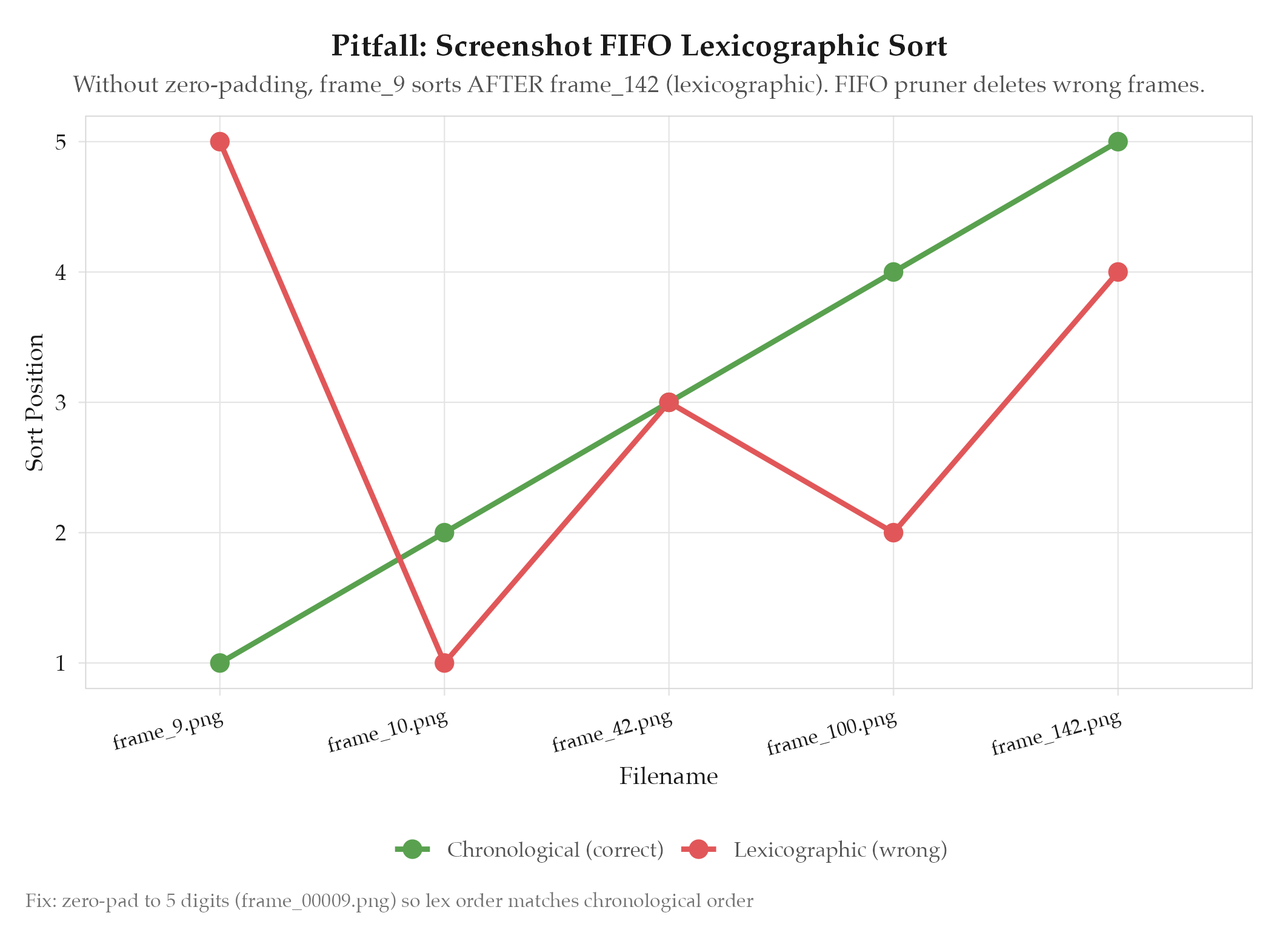
The Dakka screenshot FIFO pruner sorted filenames lexicographically to find the oldest frames to delete. Frame 142 sorted before frame 42: 1 < 4 at the first differing character. The pruner deleted recent frames and kept ancient ones. Debug sessions lost evidence.
Root Cause
See definitions/root-cause-analysis for the analytical framework. Specific cause: lexicographic (string) comparison works character-by-character from left to right. Numbers embedded in strings don’t compare numerically unless they have equal digit length. "9" > "10" lexicographically because '9' > '1'. Without zero-padding, any frame number crossing a power-of-10 boundary (10, 100, 1000) breaks the sort invariant.
How to Avoid
Always zero-pad frame numbers to at least 5 digits (frame_00042.png). This ensures lexicographic order matches chronological order for up to 99,999 frames. At 1 frame per second, that covers ~27 hours of continuous capture: more than enough for any debug session.
const filename = `frame_${String(frameNumber).padStart(5, '0')}.png`;
// frame_00042.png, frame_00142.png: sorts correctly
If you inherit un-padded filenames from an older system, sort with a numeric comparator instead of relying on the default string sort:
files.sort((a, b) => {
  const numA = parseInt(a.match(/(\d+)/)[1]);
  const numB = parseInt(b.match(/(\d+)/)[1]);
  return numA - numB;
});
Related
- projects/dakka/_index: parent project
- skills/debug-capture-system: skill where this was discovered