MQI session-picker + per-session sidecar: 104 commits, rusty-bloomnet takes 55
Signal
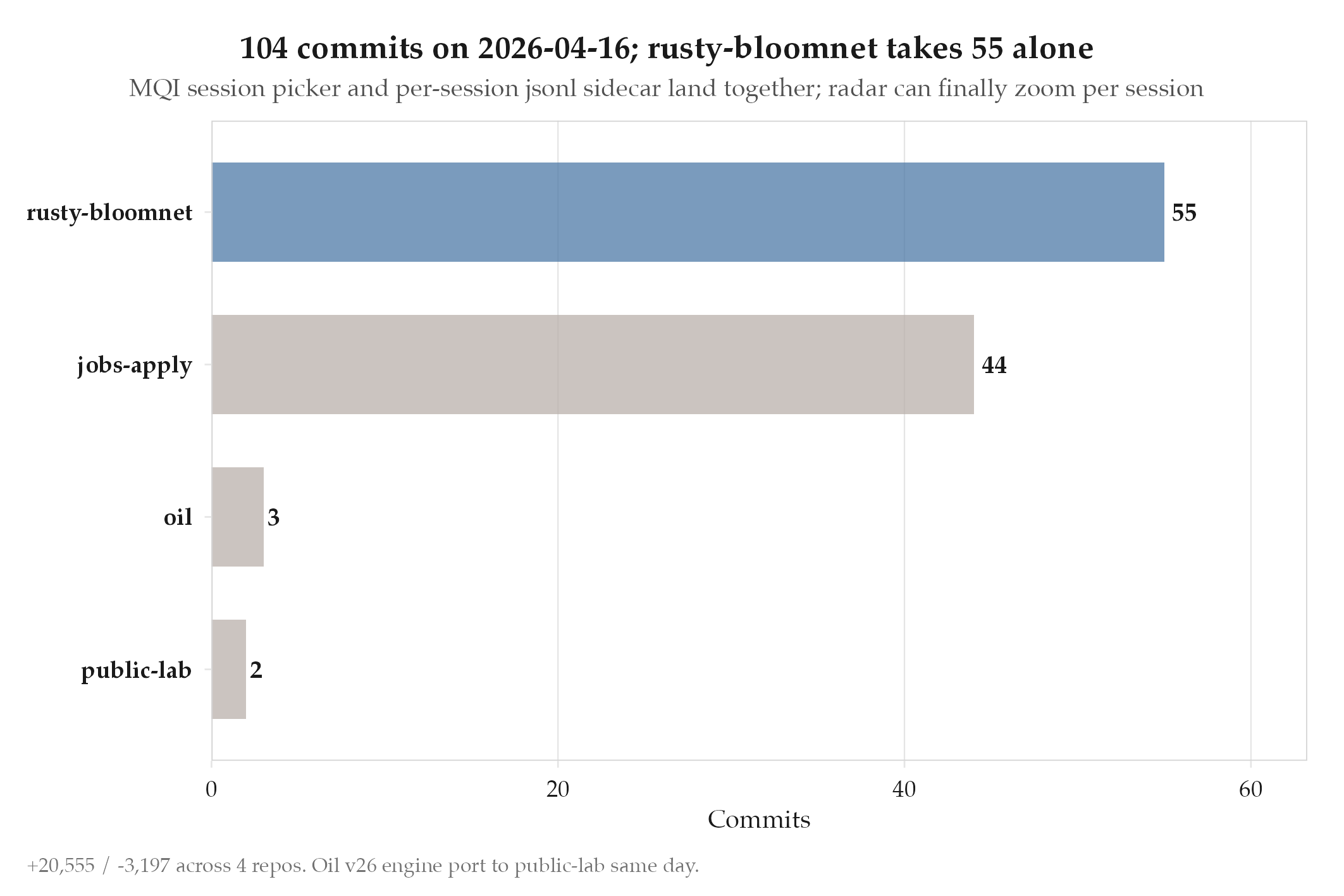
MQI got a session picker. Per-session sidecar JSONL plus HTTP API so the radar chart can zoom into any session. 104 commits, 55 on rusty-bloomnet alone. Today sits inside the Apr 14-18 vault engine v1 shipping arc, and this is the observability step: before today, MQI was a daily average and you had to trust the aggregate. Now the daily average is a roll-up over measurable per-session points, and the radar chart can actually drill in. This is the infrastructure that lets every other MQI conversation from here on be grounded in specific sessions rather than averages.
Evidence
- rusty-bloomnet (55 commits, +10,213/-1,267): session picker for the MQI radar chart, per-session JSONL sidecar alongside bloomnet.db (each session gets its own detail file), HTTP API for sessions so the Leptos dashboard and any external tool can query specific sessions without SQL. The sidecar pattern is the same shape as the public-lab generated-site pattern: durable artifact on disk, DB as the source of truth, consumer picks the format it wants.
- jobs-apply (44 commits, +5,809): 260416.2 activity consolidation changelog, many WIP auto-saves from the session-end hook. The dirty-tree protector is earning its keep, catching half-finished work before session rollover.
- oil (3 commits): Day 47 data refresh with WTI at $94.07 intraday in the post-blockade regime, plus a CLAUDE.md v26 sync. The launchd refresh is doing all the heavy lifting; the 3 commits are just checkpoints.
- public-lab (2 commits): restored jobs-apply / oil / stella content after the last scrub, and ported the v26 oil engine onto public-lab so the public dashboard reflects the same v26 physics that the private model uses.
So What
This is what per-session granularity unlocks. MQI as a daily average was a fuzzy signal: good days and bad days got averaged into a trend line, and I could tell the trend was moving but not which sessions were driving it. Per-session sidecar plus session picker means I can finally ask “did the 3am session drop quality, or just the 10am one?” and get an answer. The sidecar design also matters: per-session JSONL means every session has a durable narrative artifact on disk that any downstream tool can read without re-querying the database. That is the shape I want for every metric from here on: DB writes the roll-up, JSONL keeps the detail, and the consumer (Leptos page, Claude query, brand-voice journal generator) picks its surface. The rusty-bloomnet-heavy day (55 of 104 commits) is also a signal about where investment is concentrating: the vault engine is now mature enough that most of the interesting work is on the observability and analytics layer on top of it, not on the engine itself.
What’s Next
Session-level MQI opens the door for per-skill MQI. What is the quality delta between a session with TodoWrite and one without? Between a session that used a vault-search skill versus one that did not? Tomorrow (Apr 17) the focus shifts: stella lab audit catches a journal-title bug that has been silent for weeks because Zod was dropping unknown frontmatter keys. The audit-first day is exactly the pattern the observability work from today enables: surface the silent failures, then fix them.
Log
- Sessions: 0 (bloomnet.db lag, evidence from live git)
- Top repo: rusty-bloomnet (55 commits)
- Commits: 104 across 4 repos (+20,555 / -3,197)
- Notable: MQI session-picker + sidecar, oil v26 engine port to public-lab
- Cost: not tracked (post-bloomnet-ingest window)