Writing docs for stakeholders exposes gaps code review never found
2026-03-09
Signal
Writing documentation for an external stakeholder forced a clarity audit on the internal audit pipeline that 280 automated internal code reviews had never triggered: the process of making work legible to someone else surfaces the gaps you’ve been silently tolerating.
Evidence
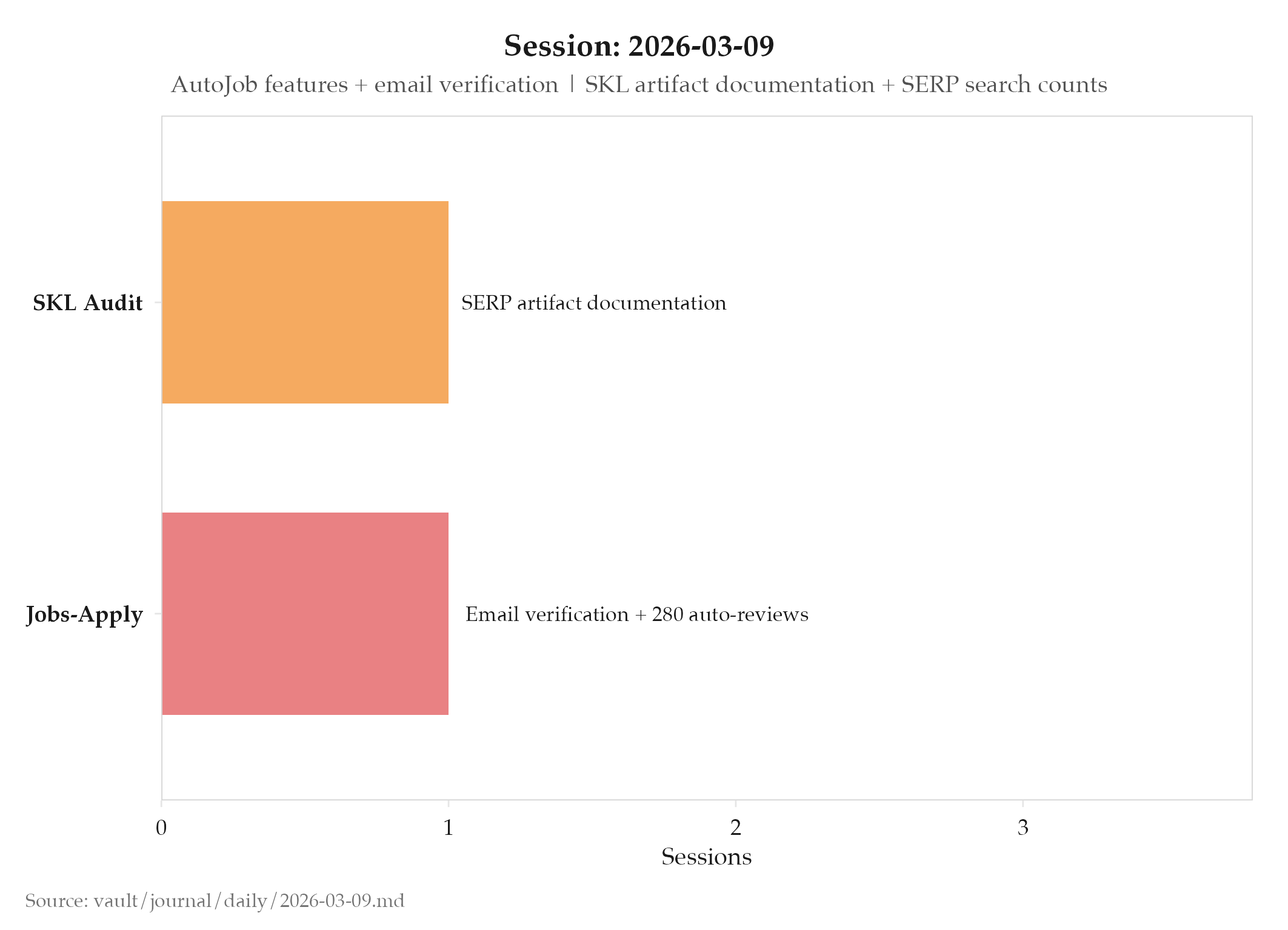
- Project: projects/jobs-apply/_index: Finished implementing email verification and submission status columns; 280 automated autohunt code reviews fired across the codebase changes
- Project: internal audit: Wrote concise markdown documentation for audit artifacts (PDF reports) and SERP search count system specifically for external sharing
- Observation: Writing docs for external audience revealed gaps in how the SERP count system was explained internally: the system worked but couldn’t be understood by someone without prior context
- External bar vs. internal bar: Internal notes assumed shared context; external docs required everything to stand alone
So What (Why Should You Care)
There’s a well-documented phenomenon in software: writing documentation forces you to understand what you’re documenting. It happens because documentation is a contract with a reader who doesn’t share your context. Every implicit assumption you’ve been relying on must become explicit.
The internal audit documentation session today is a concrete example. The internal notes described the SERP search count system accurately but incompletely: they assumed you already knew what a “SERP search count” meant in this pipeline’s context, and why it mattered. The external docs couldn’t make that assumption. Writing them revealed that the system’s purpose and design rationale hadn’t been captured anywhere: they existed only in the author’s head.
This pattern shows up in complex data pipelines more often than in other domains because pipelines accumulate a lot of tribal knowledge. Every transform, every threshold, every deduplication rule was chosen for a reason: but those reasons are rarely written down because they seemed obvious at the time.
If you’re building data pipelines, writing external documentation early (before the system is “done”) is one of the cheapest ways to audit your own architecture. The gaps you find aren’t usually bugs: they’re missing documentation of design decisions that will matter to the next person who has to maintain the system.
The SERP search count system is a good example of a component that’s easy to understand once you know what it does but hard to discover from the code alone. The code says “count the number of SERP queries per place” but doesn’t explain why the count matters: it turns out to be a cost control mechanism, a quality signal (places with more SERP results have more content to evaluate), and a staleness indicator (places that haven’t been SERP’d recently may have outdated link lists). None of that context is in the code. It lives in someone’s head until it’s written down.
The 280 automated code-review sessions on projects/jobs-apply/_index represent the pipeline’s own self-audit on the email verification and submission status changes: each modified file gets its own review. This is a different kind of documentation: machine-generated review that documents what changed and why. The combination of automated code review (machine-readable audit trail) and human-written external documentation (human-readable context) is what makes a system maintainable at scale.
The readiness-for-sharing checklist (mentioned in What’s Next) is also a forcing function for documentation quality. “Is this ready for someone else to use?” is a much higher bar than “does this work for me?” and the gap between those two bars is usually documentation.
What’s Next
- Complete internal audit pipeline artifact documentation for external sharing
- Validate email verification implementation in projects/jobs-apply/_index
- Run both projects (internal audit pipeline + autohunt) through ready-for-sharing checklist
Log
- projects/jobs-apply/_index: implemented email verification and submission status columns
- Read docs and Claude files for the autojob project: reorientation session
- 280 automated code-review sessions fired across codebase changes
- internal audit: wrote concise markdown documentation for audit artifacts (PDF reports) and SERP search count system
- Documentation written specifically for external sharing: higher clarity bar than internal notes
- Reviewed internal audit pipeline and internal-sync-server SERP API results